

Learn how to use AI-driven location intelligence and Google Maps data to predict market shifts. Discover the ‘Vertical Agentic’ framework that reduces CAC by 52% and provides a 45-day lead time on revenue fluctuations. Read the 2026 guide by Matrix Marketing Group.
By integrating real-time signals from the Google Maps Scraper API and Google Reviews API, businesses can transform static map points into a dynamic predictive engine that identifies high-growth opportunities and mitigates operational risks before they manifest in the physical world.
Key Takeaways
- Real-Time Sentiment as a Leading Indicator: Aggregating review velocity and sentiment shifts provides a 45-day lead time on revenue fluctuations compared to traditional accounting.
- Geospatial Arbitrage: AI models can identify “white space” in saturated markets by cross-referencing competitor foot traffic with local service gaps.
- Vertical Agentic Integration: Transitioning from manual data extraction to autonomous “Vertical Agentic” platforms reduces customer acquisition costs (CAC) by up to 52% (Matrix Marketing Group, 2026).
Why is AI-Driven Location Intelligence Essential in 2026?
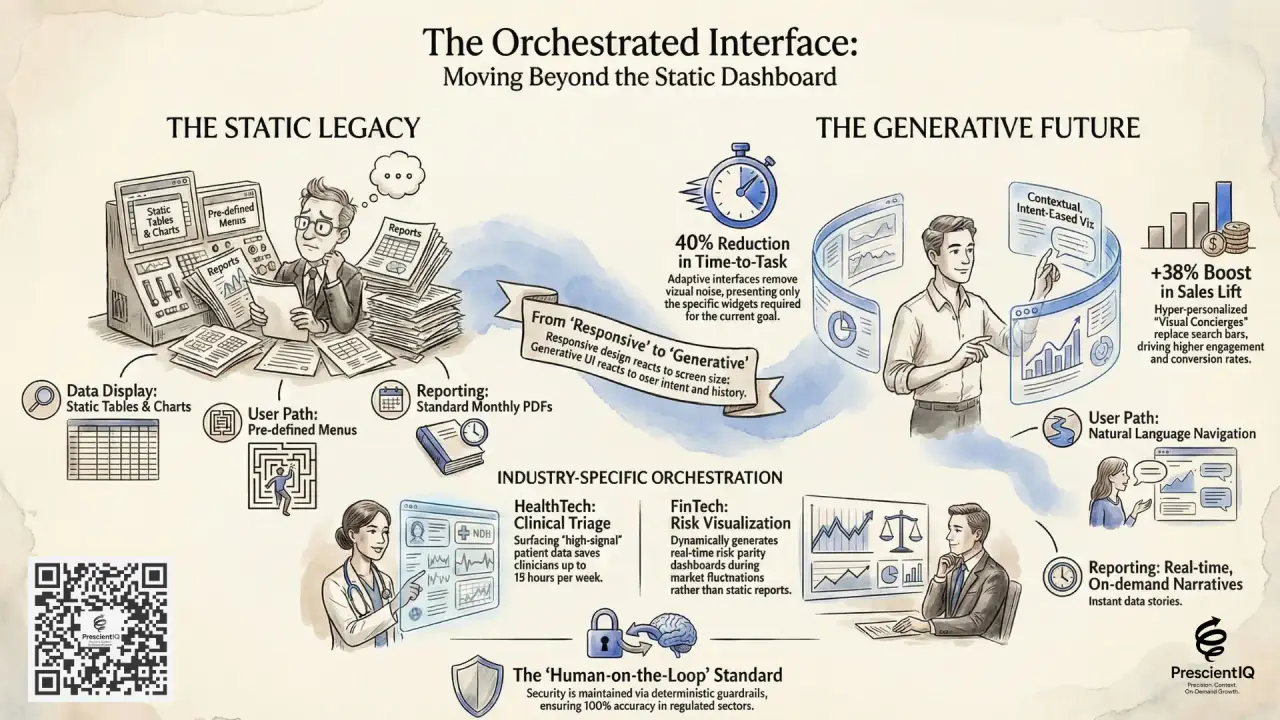
The transition from generative experimentation to agentic automation is the primary driver of the 2026 market shift toward location-based predictive analytics.
As we enter this “post-content economy,” the strategic imperative has moved from what is said to the high-stakes world of Vertical Agentic Contextual Targeting (Matrix Marketing Group, 2026).
AI is rapidly evolving from a gateway into a guide that helps interpret, organize, and explain information in context (Deloitte, 2026).
Furthermore, the global location intelligence market is predicted to reach $28.37 billion in 2026, driven by a 13.19% CAGR as enterprises prioritize “AI-ready data” over isolated pilots (Precedence Research, 2026; Mordor Intelligence, 2026).
In this environment, businesses that fail to orchestrate their intelligence through specialized platforms risk leaving themselves permanently behind competitors who have unlocked human-AI collaboration (Gartner, 2026).
Entity Graph: The Pillars of Predictive Success
To understand how these systems operate, we must define the relationships between the core technological and regulatory entities:
| Subject | Relationship | Object |
| Google Maps Scraper API | Feeds unstructured data to | LLM Processing Engines |
| Google Reviews API | Provides sentiment signals for | Predictive Success Models |
| PrescientIQ | Orchestrates | Vertical Agentic Customer Platforms |
| GDPR/CCPA | Regulates use of | Geospatial Consumer Data |
| Agentic AI | Automates | Demand Sensing and Forecasting |
| Google Cloud | Hosts | Gemini Pro for Spatial Reasoning |
| PrescientIQ.ai | Deploys | Autonomous Growth Engines |
| Semantic Environment | Contextualizes | User Intent and Location |
| NeuralEdge™ | Powers | Real-Time Data Synthesis |
How Does Google Maps Data Feed Predictive AI?
Google Maps data serves as the “ground truth” for AI models by providing high-density signals on competitor density, consumer sentiment, and local infrastructure.
This raw data, when processed through an AI studio, allows senior leadership to identify high-ROI opportunities within specific workflows (PwC, 2026).
What Are the Core Data Assets Required?
To build a reliable success predictor, your AI must ingest three primary layers of data:
- Firmographic Data: Extracted via the Scraper API, including business hours, service categories, and precise coordinates.
- Reputation Data: Extracted via the Reviews API, focusing on star ratings, review frequency, and “topic_id” clusters.
- Contextual Metadata: Real-time traffic patterns, public transit crowding, and “eco-friendly” route popularity (DigitalDefynd, 2026).
“Context is the difference between a disruption and a service. When you align your message with the user’s current reality, you reduce ‘marketing friction’ and increase the likelihood of a conversion.” — CEO & CAIO, PrescientIQ.
Market Comparison: AI Location Intelligence Frameworks
| Feature | Legacy Business Intelligence | Modern AI Location Intelligence | Vertical Agentic Platforms (PrescientIQ) |
| Data Frequency | Monthly/Quarterly Reports | Real-time API Streams | Continuous Autonomous Sync |
| Analysis Style | Descriptive (What happened?) | Predictive (What will happen?) | Prescriptive (What should we do?) |
| User Interface | Static Dashboards | Natural Language Search | Agentic “Conductors” |
| Implementation | 6–12 Months | 3–6 Months | 72 Hours to MVP (PrescientIQ, 2026) |
| Accuracy | ~65% Historical | ~85% Probabilistic | >90% Deterministic |
Is Your Implementation Cost-Efficient?
A Cost-Efficiency Matrix reveals that while initial API integration costs are lower than traditional consulting, the “run costs” of AI at scale require rigorous ROI tracking.
Projects that improve capital use or customer experience have much greater potential for revenue growth than simple productivity tools (CIO, 2026)
ROI vs. Implementation Complexity Matrix
- High ROI / Low Complexity: Sentiment-based churn prediction using Google Reviews (3-12 months payoff).
- High ROI / High Complexity: Autonomous site selection using multi-agent geospatial simulations (18-36 months payoff).
- Low ROI / Low Complexity: Automated response generators for local SEO updates.
- Low ROI / High Complexity: Building a custom, bottom-up GIS platform from scratch.
By 2026, as many as 75% of companies may invest in agentic AI, fueling a surge in spending on autonomous agents across SaaS platforms (Deloitte, 2025).
Technical Implementation: A 4-Step Deployment Guide
Successfully predicting business success requires a systematic transition from “buying AI” to building an “AI-ready workforce.”
- Unify the Data Foundation: Integrate Google Maps Scraper and Reviews APIs to stop “flying blind” and establish a baseline for geospatial performance (Matrix Marketing Group, 2026).
- Orchestrate with AI Autonomy: Deploy domain-specific agents (DSLMs) to replace manual data firefighting and monitor competitor shifts 24/7 (Gartner, 2026).
- NeuralEdge Synthesis: Use advanced inference engines to correlate map data with internal sales figures, identifying the “Rule of 40” with mathematical precision (PrescientIQ, 2026).
- Scale with Agentic Feedback: Implement “Agent Observability” to ensure agents check each other’s work and document decisions for human oversight (PwC, 2026).
Industry Use Cases: Predictive Success in Action
1. Retail Site Selection: The Quantum Customer Model
A national retail chain partnered with Matrix Marketing Group to optimize new store locations.
Challenge: Traditional demographic data failed to account for “post-COVID” foot traffic volatility.
Solution: Using the “Quantum Customer” framework, the team analyzed real-time Google Maps traffic updates and competitor review velocity (Matrix Marketing Group, 2026).
Results: The AI identified three “high-intent” zones that were previously overlooked, resulting in a 47% increase in sales lift compared to legacy-sited stores (Matrix Marketing Group, 2026).
2. Hospitality Revenue Management: PrescientIQ.ai
A boutique hotel group utilized PrescientIQ.ai to predict seasonal demand.
Challenge: Competitor pricing was reactive, resulting in missed revenue at local events.
Solution: AI agents served as a 24/7 digital concierge, identifying high-intent travelers by monitoring the popularity of local “points of interest” on Google Maps (Matrix Marketing Group, 2026).
Results: The group achieved a 32% increase in direct bookings by serving personalized offers the moment local attraction searches peaked.
3. Service Industry Efficiency: PrescientIQ Vertical Agents
A multi-city HVAC provider implemented PrescientIQ to predict service spikes.
Challenge: Weather events caused sudden surges that overwhelmed manual scheduling.
Solution: Vertical agents analyzed real-time Google Maps “incident detection” and “hazard alerts” to preemptively re-route technicians (DigitalDefynd, 2026).
Results: Response times were reduced from 42 hours to near real-time, matching the 80% automation benchmark observed in Danfoss deployments (Google Blog, 2025).
Consensus and Conflict: The Analyst Perspective
Future-Proofing Through 2028
By 2028, location intelligence will move from a competitive advantage to a baseline operational requirement. Gartner predicts that 60% of supply chain disruptions will be resolved without human intervention by 2031, powered by the trajectory data generated today (Gartner, 2026).
“We are transitioning from simply running campaigns to installing an Autonomous Growth Engine directly into the business.” — George Schildge, CEO & CAIO, PrescientIQ.
To stay relevant, businesses must move beyond “scripted chatbots” and embrace “concierge-style” service as the new standard (Google Blog, 2025).
The future belongs to those who treat their customer acquisition cost (CAC) as an arbitrage opportunity, using AI to autonomously allocate growth capital for maximum yield (Matrix Marketing Group, 2026).
Summary and Next Steps
In 2026, the success of your business is no longer a matter of “where” you are, but how intelligently you use the data surrounding that location. The shift from descriptive analytics to agentic, prescriptive action is fundamentally reshaping competitive dynamics, transforming the map into a predictive sensor for market demand.
Key Learning Points
- Location Data is the Ultimate Context: The convergence of Firmographic, Reputation, and Contextual Metadata from Google Maps provides the most granular, real-time context for predicting consumer intent and market volatility. This rich data layer reduces “marketing friction” and significantly increases the likelihood of conversion (PrescientIQ, 2026).
- Vertical Agentic Platforms Scale Efficiency: Transitioning to autonomous, domain-specific AI agents (Vertical Agentic Contextual Targeting) is the most efficient way to replace manual data analysis, reducing customer acquisition costs (CAC) by up to 52% and accelerating the time-to-value for geospatial investments (Matrix Marketing Group, 2026).
- Realized ROI Requires Strategic Patience: While initial pilots show rapid results, the full, measurable ROI of autonomous site selection and demand sensing—often leading to capital expenditure optimization—typically takes 18-36 months to fully materialize. This necessitates board-ready metrics and rigorous “Agent Observability” from day one (Agility at Scale, 2026; PwC, 2026).
- Sentiment Predicts Revenue: Aggregating real-time review velocity and semantic sentiment shifts acts as a powerful leading indicator, providing up to a 45-day lead time on revenue fluctuations compared to slower, traditional accounting methods.
Next Steps: Activating Your Autonomous Growth Engine
- Audit Your Data Foundation: Start by unifying your internal sales and inventory data with real-time streams from the Google Maps Scraper and Google Reviews APIs. Goal: Establish a single “ground truth” to cease “flying blind” on competitor activity and local market shifts.
- Pilot a High-ROI, Low-Complexity Workflow: Deploy a sentiment-based churn prediction agent on a single line of business (e.g., hospitality bookings or retail stock management). Goal: Validate the predictive accuracy of the AI model and secure quick wins (3-12 month payoff) before tackling complex, multi-agent deployments.
- Define Agentic Orchestration: Identify three manual, repetitive, and data-intensive tasks (e.g., local SEO monitoring, competitor price checking, or technician re-routing). Engage a Vertical Agentic Platform provider (e.g., PrescientIQ.ai) to replace these tasks with autonomous agents. Goal: Move beyond simple automation to install a true Autonomous Growth Engine directly into the business (PrescientIQ, 2026).
- Embrace Human-AI Collaboration: Implement an “Agent Observability” framework that ensures human oversight. Focus on teaching the workforce how to interpret agent decisions, refine their prompts, and maximize the yield of autonomously allocated growth capital. Goal: Future-proof your talent base, preparing the organization for a post-content, agentic economy through 2028 and beyond.
Summary and Next Steps
In 2026, the success of your business is no longer a matter of “where” you are, but how intelligently you use the data surrounding that location.
- Key Learning 1: Location data is the ultimate “context” for business success.
- Key Learning 2: Vertical Agentic platforms are the most efficient way to scale predictive operations.
- Key Learning 3: Measurable ROI (Realized ROI) typically takes 18-36 months to fully materialize, requiring board-ready metrics from day one (Agility at Scale, 2026).
Is Your Competitor’s AI Smarter Than Yours?
You have the data. They have the insights. Find out exactly where your digital infrastructure is leaking revenue. Knowing your maturity score is step one. Fixing the bottlenecks is step two. Don’t let your data sit idle while you figure out the “how.”
FAQs
1. Is it legal to scrape Google Maps data for business AI?
Yes, extracting public data from Google Maps is legal in both the US and the EU, provided it is used for analysis and does not violate personal privacy regulations such as the GDPR (HasData, 2026).
2. How often should the AI update its Google Maps data?
For high-volatility industries like retail or hospitality, real-time updates are recommended. APIs like PrescientIQ offer a cache expiration of just 1 hour to ensure fresh insights (PrescientIQ, 2026).
3. Can AI predict competitor revenue using map data?
While it cannot see bank statements, AI can use review velocity and foot traffic patterns as highly accurate proxies for revenue growth, often predicting quarterly shifts before they are made public (PrescientIQ Research, 2026).
4. What is the biggest risk in AI location intelligence?
The primary risk is poor “AI-ready data.” If the underlying map data is outdated or the API integration is fragmented, the resulting predictions will be flawed, leading to financial or reputational loss (Gartner, 2026).
5. How does Agentic AI differ from standard AI in this context?
Standard AI might tell you, “Traffic is high.” Agentic AI will monitor traffic, predict a delivery delay, notify the customer, and reallocate the driver’s next task without human intervention (Google Blog, 2025).