
Learn About AI-Driven Competitive Intelligence Radar for Better Revenue Capture.
Key Takeaways
- Continuous Surveillance: AI Radars replace sporadic quarterly reports with 24/7 autonomous monitoring of competitor pricing, messaging, and reviews.
- Unified C-Suite Strategy: The tool aligns the CMO’s need for counter-messaging agility with the CFO’s need for margin protection against price wars.
- Python-Native Infrastructure: Leveraging open-source libraries such as spaCy, Scrapy, and Selenium enables bespoke, cost-effective solutions without the expense of SaaS lock-in.
- Predictive Capability: Advanced NLP moves beyond descriptive analytics to predictive modeling, forecasting competitor pivots based on hiring data and sentiment shifts.
- Statistical Significance: Companies using real-time competitive intelligence achieve up to 4x faster revenue growth than peers relying on manual audits.
What is an AI-Driven Competitive Intelligence Radar?
An AI-Driven Competitive Intelligence Radar is an automated software system that uses web scraping and Natural Language Processing (NLP) to scan competitors’ digital footprints continuously.
It ingests unstructured data—such as pricing tables, customer reviews, and press releases—and converts it into structured, actionable alerts for immediate strategic decision-making.
Is Your Competitor’s AI Smarter Than Yours?
You have the data. They have the insights. Find out exactly where your digital infrastructure is leaking revenue. Knowing your maturity score is step one. Fixing the bottlenecks is step two. Don’t let your data sit idle while you figure out the “how.”
How does the AI Radar prevent market blindsiding?
It eliminates the latency between a competitor’s market move and your strategic counter-strike.
In the current high-velocity market, the time gap between a competitor’s action and your reaction is where revenue is lost. Traditional Competitive Intelligence (CI) relies on humans manually checking websites or reading quarterly reports.
By the time a PDF lands on the CMO’s desk, the data is obsolete. An AI-Driven Radar functions as an “Antigravity” engine—it lifts the heavy burden of manual surveillance, allowing your team to float above the noise and see the landscape clearly.
This application uses Python scripts to act as digital sentries. These sentries do not sleep.
They monitor the Document Object Model (DOM) of competitor websites for pixel-level changes. When a competitor changes their header tag from “Best CRM for Small Business” to “Enterprise-Grade CRM Solution,” the AI detects this semantic shift immediately.
For the CMO, this means instant fodder for counter-messaging A/B testing. If a competitor pivots to “security,” you can immediately launch a campaign highlighting your “ease of use.”
For the CFO, it acts as a financial firewall. If a competitor quietly slashes pricing by 15% in a specific region, the Radar alerts the finance team before your sales reps start losing deals.
This allows for proactive margin adjustment rather than reactive discounting panic.
Introduction: The Silent War for Market Share
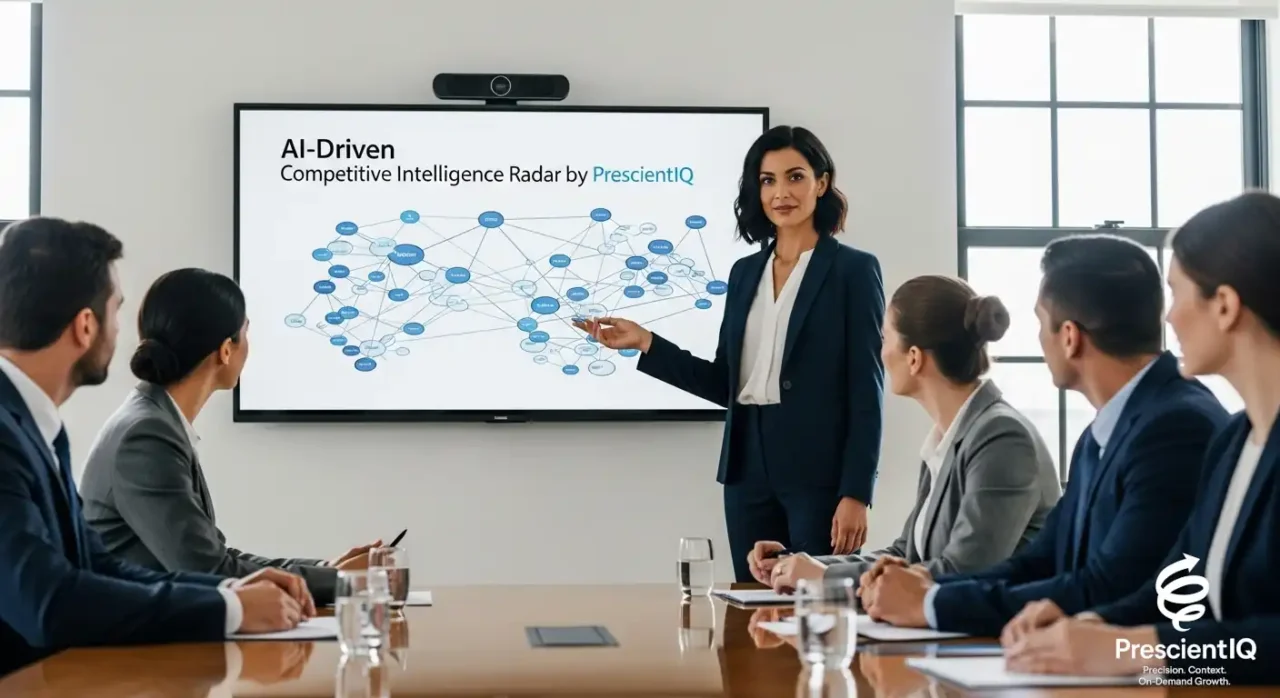
Is your strategy based on what happened last quarter, or what is happening right now?
Imagine a scenario where your biggest rival updates its pricing structure at 2:00 AM on a Saturday.
By Monday morning, their sales team is aggressively undercutting your proposals. Your team is oblivious, walking into sales calls with outdated battle cards.
By the time you realize what has happened—perhaps weeks later, when quarterly numbers dip—the damage is irreversible.
This is the “Blindsight Penalty,” and in the modern SaaS landscape, it costs companies millions in lost Annual Recurring Revenue (ARR).
The solution is not more analysts; it is better automation. The AI-Driven Competitive Intelligence Radar is the answer to the data deluge. It is a system that leverages the raw power of Python and Machine Learning to turn the entire internet into a structured database.
This isn’t about stealing secrets; it’s about processing public information faster than humanly possible. It is about taking the “Dark Data”—the thousands of G2 reviews, the subtle changes in API documentation, the updated job descriptions—and synthesizing them into a clear signal.
Why the C-Suite is demanding this technology:
- The CMO sees it as a weapon for brand positioning, ensuring their narrative is always one step ahead.
- The CFO views it as risk mitigation, a way to forecast revenue volatility caused by external market pressures.
- The CTO appreciates the “Antigravity” architecture—lightweight, server-side Python scripts that deliver heavy enterprise value without bloating the tech stack.
In the following sections, we will dismantle the mechanics of this system, explore the Python libraries that power it, and demonstrate why this is the highest-ROI project your data team can undertake this year.
What are the trending topics in Competitive Intelligence?
The industry is shifting from passive data collection to active, Agentic AI modeling.
The conversation around Competitive Intelligence has moved beyond simple “web monitoring.” The trending topics now focus on intent prediction and autonomous agents.
According to recent tech analysis, the volume of data generated by businesses doubles every 1.2 years. Humans can no longer cope with this influx; only AI can.
1. Agentic AI and Autonomous Loops
The buzzword of the year is Agentic AI. Unlike a passive dashboard that waits for you to log in, an AI Agent actively pursues goals.
In the context of a Radar, an agent doesn’t just report a price change; it navigates to the competitor’s checkout page, attempts to apply discount codes found on Reddit, and calculates the true effective price.
This shift from “What is the listed price?” to “What is the transaction price?” is revolutionary for CFOs.
2. “Dark Data” Illumination
Forrester Research indicates that up to 73% of data within an enterprise goes unused for analytics. In CI, “Dark Data” refers to unstructured, messy data sources that are hard to scrape.
Trending discussions focus on using Large Language Models (LLMs) to parse technical documentation, Glassdoor employee reviews, and patent filings. Mining Glassdoor, for instance, can reveal a competitor’s internal cultural struggles or high turnover in engineering, signaling a delay in their product roadmap.
3. Sentiment Arbitrage
Companies are now scraping review platforms like G2, Capterra, and TrustRadius not just for star ratings, but for semantic gaps.
If 40% of a competitor’s reviews mention “steep learning curve,” your AI Radar identifies this as a “messaging arbitrage” opportunity.
You can then programmatically bid on keywords like “Easy to use alternative to [Competitor]” effectively stealing their dissatisfied leads.
The Who, What, Where, When, and Why of AI Radars
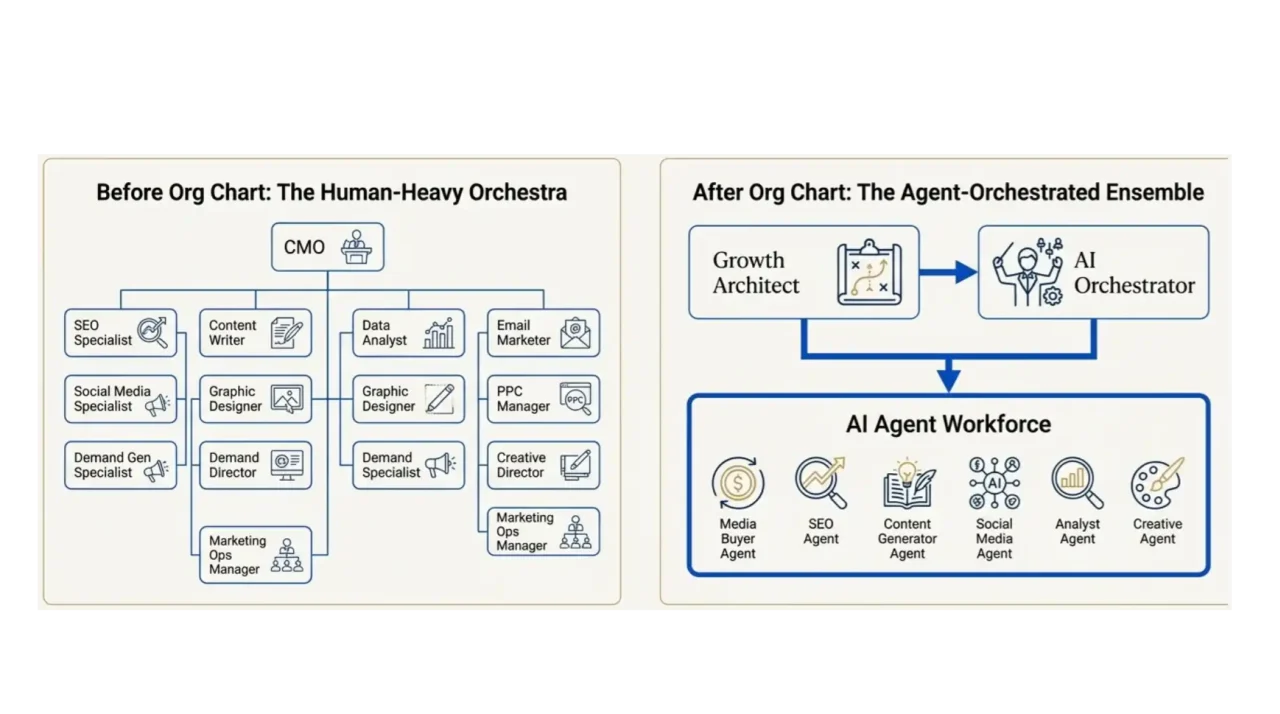
Democratizing enterprise-grade intelligence for agile, data-driven teams.
Who needs this system?
While this technology was once the exclusive domain of Fortune 500 giants with massive budgets, open-source Python libraries have democratized access.
- Product Marketers (PMMs): Use it to maintain live “Battle Cards” for sales enablement.
- Revenue Operations (RevOps): Use it to sanitize CRM data and adjust win/loss analysis based on competitor activity.
- Executive Leadership: The CEO uses it for investor relations, explaining market dynamics with real-time data rather than anecdotal evidence.
What is the technology stack?
The core is built on Python, the lingua franca of data science.
- Scrapers: Scrapy is used for high-speed, asynchronous crawling of static pages. Playwright or Selenium handles dynamic, JavaScript-heavy sites (like Single Page Applications).
- NLP & Processing: spaCy is utilized for Named Entity Recognition (NER) to identify specific product names or people. Hugging Face Transformers (such as BERT or RoBERTa) are used for deep sentiment analysis that better understands context than simple keyword matching.
- Infrastructure: The radar typically runs on cloud instances (AWS EC2, Google Cloud Run) and uses Docker containers for portability.
Where does the monitoring happen?
The Radar operates in the cloud but mimics local presence. It uses Residential Proxy Networks (like Bright Data or SmartProxy) to route requests through consumer IP addresses.
This is critical because competitors often display different pricing to users in London, New York, and Tokyo. The Radar must physically “be” in those locations to capture accurate data.
When does it run?
Unlike human analysts who work 9-to-5, the AI Radar is asynchronous.
- Pricing: Checks might run every 6 hours.
- Press/News: Checks might run hourly.
- Reviews: Checks might run daily.
The critical “When” is the alert timing. The system pushes notifications via webhooks to Slack or Microsoft Teams the second a threshold is breached.
Why is it critical now?
The velocity of business has accelerated. Competitors deploy code daily. Pricing algorithms adjust in real-time.
According to a McKinsey report, companies that adopt AI for market anticipation can see a 20% increase in cash flow.
Relying on manual checks is like trying to catch a speeding bullet with a butterfly net. You need a system that keeps pace with the market.
Table 1: Traditional CI vs. AI-Driven Radar
| Feature | Traditional CI | AI-Driven Radar |
| Data Source | Manual Google Searches | Automated Python Scrapers |
| Frequency | Quarterly / Monthly | Real-time / Hourly |
| Analysis | Human Interpretation | NLP & Sentiment Analysis |
| Focus | “What happened?” | “What is happening & Why?” |
| Stakeholder | Strategy Team | Entire C-Suite (CMO, CFO, Sales) |
What are the top research firms writing about this?
Analysts are emphasizing the shift from “monitoring” to “decision intelligence.”
Leading research firms are unanimous: the future of competitive intelligence is automated and predictive.
Gartner has coined the term “Decision Intelligence” to describe this evolution.
In their recent “Market Guide for Competitive and Market Intelligence,” they argue that the volume of information is no longer the problem; the problem is synthesizing that information.
Gartner predicts that by 2026, 30% of decision-making will be automated by AI systems that ingest market data.
They explicitly warn against “Dashboard Fatigue” and advocate for systems that only alert stakeholders when specific anomalies occur.
Forrester focuses on the concept of the “Insights-Driven Business.”
Their research suggests that insight-driven businesses grow at an average of 30% annually, taking market share from less informed peers. Forrester highlights the risk of “Zombie CI”—reports that are generated but never read.
They recommend integrating CI directly into the workflows where decisions are made (e.g., in Salesforce or Slack) rather than in a separate portal.
McKinsey & Company discusses the financial impact. In their articles on “AI in Strategy,” they estimate that AI-driven competitive analysis can improve decision-making speed by 25-50%.
They emphasize that the companies extracting the most value are not just buying tools, but building proprietary “Data Products” (like the Radar described here) that fit their specific niche.
3 Use Cases

How the AI Radar transforms chaos into clarity.
Use Case 1: The Pricing War Early Warning
Your main competitor drops the price of their “Enterprise Plan” by 18% on a Friday afternoon to close end-of-quarter deals. Your pricing page remains static.
Your sales team enters negotiations on Monday, unaware of the undercut, and loses 4 out of 5 deals, citing “budget constraints.”
The CFO is blindsided by a revenue miss at month-end.
Your Python script, using BeautifulSoup, detects an integer change in the #price div on the competitor’s site. It cross-references this with historical data stored in a SQL database to confirm it’s a deviation, not a glitch.
The system fires a Slack alert to the CFO and Head of Sales: “ALERT: Competitor X Price Drop of 18% detected. Region: North America. Suggested Action: Activate ‘Match Rate’ protocol.” The sales team is armed with a counteroffer before they even pick up the phone. Revenue is preserved.
Use Case 2: The “Ghost” Feature Launch
You find out about a competitor’s new “AI Reporting” feature when you see their press release on TechCrunch. You are now six months behind in development. Your CMO scrambles to create a defensive position, but the narrative has already been set.
Your Radar scans the competitor’s Careers Page and API Documentation daily. Three months ago, they noticed they had hired five “LLM Engineers” and added a new endpoint, /v1/ai-generate, to their public developer docs.
The system flags a “High Probability of AI Feature Launch” months in advance. Your Product team reprioritizes the roadmap to fast-track your own AI features.
The CMO prepares a “Why Our AI is Better” campaign ready to launch the same day the competitor announces theirs, effectively neutralizing their first-mover advantage.
Use Case 3: Sentiment & Review Mining
Your Product Manager manually browses Capterra reviews once a month, skimming for general vibes. They miss a subtle but growing trend of complaints about the competitor’s mobile app crashing on iOS 17.
An NLP pipeline using VADER or TextBlob sentiment analysis ingests every new review within minutes of posting. It identifies a statistically significant spike (2 standard deviations above the mean) in the keywords “crash,” “iOS,” and “bug” associated with the competitor.
The Radar alerts the Marketing and Sales teams: “Competitor Weakness Detected: iOS Stability.” The Marketing team immediately spins up a LinkedIn ad campaign targeting the competitor’s followers with the header: “Tired of mobile crashes? Switch to the 99.99% uptime platform.”
This is data-driven predation.
What challenges does AI Competitive Intelligence cause?
The primary risks are technical fragility, legal ambiguity, and data hallucination.
1. The “Cat and Mouse” of Anti-Scraping
Competitors do not want to be watched. Modern websites use sophisticated measures like Cloudflare Turnstile, CAPTCHAs, and dynamic DOM obfuscation (randomizing CSS class names like .price-xyz to .price-abc) to break scrapers.
- The Challenge: A standard Python requests.get() call will be blocked immediately by a 403 Forbidden error.
- The Fix: You must implement Headless Browsers (tools that control a real Chrome instance) and Stealth Plugins to modify your browser fingerprint so it appears identical to a human user.
2. Hallucinations and False Positives
If you use Generative AI (like GPT-5) to summarize competitor strategies, it may “hallucinate.” For example, if asked to summarize a blank or broken page, the AI might invent a product strategy that doesn’t exist.
- The Challenge: The CFO making a financial decision based on phantom data is a catastrophic failure mode.
- The Fix: Use Extractive NLP (pulling actual text) for facts, and use Generative AI only to summarize provided text. Always maintain a “Human in the Loop” for critical alerts.
3. Legal and Ethical Gray Zones
While scraping public data is generally considered legal in the US (precipitated by the hiQ Labs v. LinkedIn ruling), there are boundaries.
Scraping behind a login wall (which requires agreeing to Terms of Service) is contractually risky.
- The Challenge: Aggressive scraping can trigger IP bans or even Cease-and-Desist letters if it disrupts the competitor’s server load.
- The Fix: Adhere to Ethical Scraping Standards. Respect robots.txt where possible, limit request rates (e.g., one request every 5 seconds), and identify your bot in the User-Agent string so webmasters can contact you if there is an issue.
Table 2: Risk Mitigation Strategy
| Risk Category | Technical Challenge | Strategic Solution |
| Data Integrity | DOM changes breaking scrapers | Implement “Self-Healing” scraper logic & visual regression testing. |
| Legal | Terms of Service violation | Scrape only public pages; never scrape behind a login. |
| Operational | IP Blocking / Ban | Use a rotating Residential Proxy network to diversify IP footprint. |
How to Implement an AI Radar: A Step-by-Step Guide
Building this requires a disciplined pipeline: Scrape, Clean, Analyze, Alert.
Phase 1: The Collection Layer (Python)
You need to gather the raw materials.
- Define Targets: Identify the specific URLs (Pricing, Features, Blog, Careers).
- Select Libraries:
- Use Scrapy for broad, multi-page crawling.
- Use Selenium or Playwright for rendering JavaScript.
- Code the Scraper:
- Tip: Always randomize your “User-Agent” and add random time delays (time.sleep(random.uniform(2, 5))) between requests to mimic human behavior.
Phase 2: The Processing Layer (NLP)
Raw HTML is messy. You need structured data.
- Cleaning: Use BeautifulSoup to strip HTML tags, scripts, and CSS.
- Entity Extraction: Use spaCy to identify Named Entities (products, locations, dates).
- Why? It helps distinguish between “Apple” the company and “apple” the fruit, or in a B2B context, “Salesforce” the integration vs. “sales force” the team.
- Sentiment Scoring: Use NLTK’s VADER analyzer. It gives a compound score from -1 (negative) to +1 (positive).
- Metric: If the average sentiment of reviews drops below 0.2, trigger an alert.
Phase 3: The Analysis & Alerting Layer
- Comparison Logic: You need a “State File” (JSON or SQL).
- Logic: If New_Price != Old_Price AND Change > 5% THEN Alert.
- The Push: Do not build a dashboard nobody looks at. Push alerts to where the team works.
- Use Python’s requests library to send a JSON payload to a Slack Webhook URL.
Phase 4: Visualization (The Antigravity UI)
For the C-Suite, who may want a monthly overview, build a simple web app.
- Tool: Streamlit. It allows you to build data dashboards entirely in Python without knowing HTML or CSS. You can visualize price trends over time or sentiment heatmaps with just a few lines of code.
Table 3: The Python Toolkit for AI Radar
| Component | Library | Purpose |
| Scraping | Scrapy / Playwright | Fetching the raw HTML/JS data. |
| Parsing | BeautifulSoup | Cleaning and navigating the HTML tree. |
| NLP | spaCy / NLTK | Understanding text, entities, and sentiment. |
| Data Handling | Pandas | Organizing data into tables/dataframes. |
| Dashboard | Streamlit | Visualizing the data for stakeholders. |
Conclusion
The era of static competitive reports is over. The era of the Radar has begun.
Implementing an AI-Driven Competitive Intelligence Radar is not merely a technical upgrade; it is a fundamental shift in organizational cognition. It moves the CMO and CFO from a reactive stance—scrambling to explain why they lost market share—to a proactive stance, where they are maneuvering ahead of the market curve.
By leveraging Python, NLP, and Automated Scraping, you remove the heavy lifting of data collection. This is the Antigravity Advantage: the data flows up to you automatically, giving you the high ground in every competitive skirmish.
The companies that win in the next decade will not be the ones with the best intuition; they will be the ones with the best radar. They will be the ones who know their competitor’s price change before the “Save Changes” button has even cooled.
Your Next Step:
Do not try to boil the ocean. Start with a “Single Vector Proof of Concept.” Choose one competitor and one variable (e.g., Pricing). Would you like me to generate a complete, copy-paste Python script using BeautifulSoup to monitor that single page for you right now?
FAQ
What is the best language for competitive intelligence automation?
Python is widely considered the best language due to its extensive library ecosystem for web scraping (Scrapy, Beautiful Soup) and Natural Language Processing (spaCy, NLTK), which simplifies handling unstructured text data.
Is scraping competitor websites legal?
Scraping publicly available data is generally legal in many jurisdictions, provided you do not access password-protected areas, infringe on copyright, or overwhelm the site’s servers. It is crucial to respect robots.txt files and consult with legal counsel regarding your specific use case.
How does AI help in competitive analysis?
AI processes massive volumes of unstructured data significantly faster than humans. It can identify patterns, detect subtle sentiment shifts, and spot anomalies (like silent price changes or hidden job postings) that manual analysis would likely miss.
What is the difference between social listening and competitive intelligence?
Social listening primarily tracks brand sentiment and customer conversations on social media platforms. Competitive intelligence is much broader, encompassing the tracking of pricing, product features, financial health, hiring trends, and overall market positioning across the entire web.
Can AI predict competitor moves?
Yes, by analyzing “weak signals” such as specific job postings (e.g., hiring React Native developers implies a mobile app launch) or patent filings, AI can use predictive modeling to forecast strategic pivots and product launches before they serve the market.
What is “Dark Data” in competitive intelligence?
Dark Data refers to information assets that organizations collect, process, and store during regular business activities but generally fail to use for other purposes. In CI, this includes unstructured data like employee reviews, forum discussions, and technical documentation.